Blog Posts
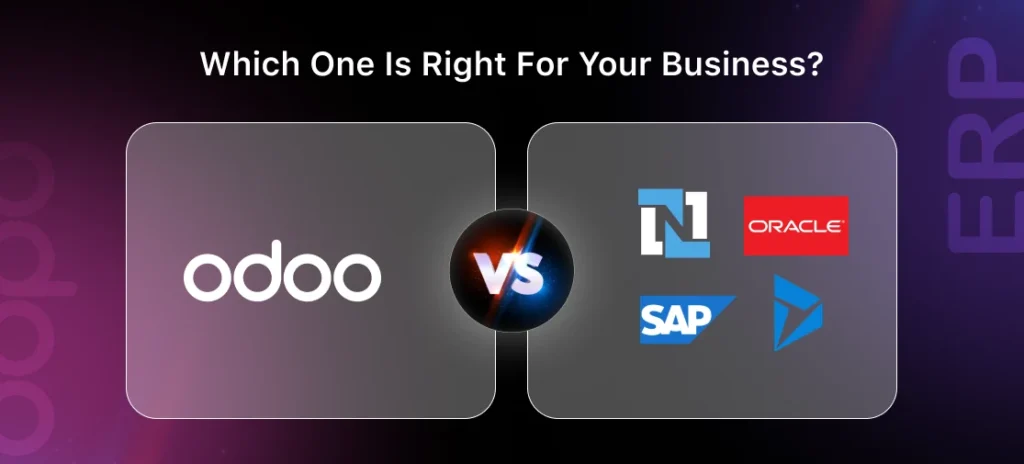
Odoo vs other ERP: Which ERP is Right for Your Business?
Choosing an ERP is like choosing the foundation for your house: if it’s too small, you’ll outgrow it in a year; if it’s too rigid, you can’t renovate.
At MapleHorn Consulting Inc., we see clients across Toronto and the US facing the same high-stakes crossroads. They’ve outgrown QuickBooks or Sage and are staring down a choice between the “Big Three” (NetSuite, SAP, Microsoft) and Odoo.
The ERP market is full of million-dollar promises, but the reality is often “death by a thousand spreadsheets.” Is Odoo actually better, or just cheaper? Let’s look at the honest benefits—and the trade-offs—in this no-fluff breakdown for 2026.
1. The “Lego” Factor (Modularity)
The Benefit: Most legacy ERPs are like a heavy, pre-built castle. You buy the whole thing, even if you only need the kitchen. Odoo is like Lego. You can start with just CRM and Invoicing, then snap on Inventory or Manufacturing six months later.
Why it matters: You don’t pay for—or get confused by—features you aren’t using yet. This “Land and Expand” strategy is perfect for growing brands that need to stay lean while scaling.
2. Total Cost of Ownership (TCO)
The Benefit: On average, Odoo’s total cost is 30% to 50% lower than NetSuite or SAP over a five-year period.
The Honest Truth: While the license is highly affordable, don’t be fooled—the real investment is in the implementation and customization. However, unlike NetSuite, you aren’t locked into a massive monthly “base fee” before you even add your first user. You pay for the value you consume.
3. Customization vs. Standardization
The Benefit: Odoo is open-source. If your business has a unique way of picking orders or a custom Shopify integration (like our partner brand SIGИ), Odoo can be molded to fit it perfectly.
The Honest Truth: With great power comes great responsibility. Heavy customization makes future upgrades (e.g., moving from Odoo 18 to Odoo 19) more complex. At MapleHorn, our goal is always to stay as “standard” as possible, customizing only where it provides a genuine competitive advantage.
4. The User Interface (UI)
The Benefit: Modern employees hate “gray-screen” software. Odoo looks and feels like a modern web app. It’s intuitive, which significantly lowers the “resistance to change” when you roll it out to your team.
Quick Comparison Table (2026)
| Feature | Odoo | NetSuite | MS Dynamics 365 |
| Best For | Scaling SMEs & Startups | Mid-to-Large Enterprise | Microsoft-heavy shops |
| Flexibility | Extremely High | Medium (Proprietary) | High (but complex) |
| Implementation | 3–6 Months | 6–12+ Months | 6–12+ Months |
| Pricing | Transparent / Per User | Opaque / Negotiated | Complex / Module-based |
Is Odoo Right for You?
Choose Odoo if:
- You are a fast-growing company that needs to move quickly.
- You want a single platform for everything (Sales, HR, Inventory, Marketing).
- You have a unique business process that “out-of-the-box” software simply can’t handle.
Avoid Odoo if:
- You are a massive multinational requiring extreme, rigid global compliance standards (S/4HANA might be the better play).
- You don’t have a reliable partner. Odoo’s flexibility can become a mess without a professional project manager (like a PMP-certified consultant) to keep the scope in check.
Ready to build your foundation?
If you’re looking to transition away from spreadsheets and onto a platform that grows with you, MapleHorn Consulting can help you navigate the implementation.

Do we hire someone in-house, tackle it ourselves (DIY), or hire an Official Odoo Partner?
Selecting an Enterprise Resource Planning (ERP) solution is one of the most significant capital and operational investments a business can make. Odoo’s modularity and open-source DNA make it an attractive choice for ambitious companies, but the path to a successful deployment is often underestimated.
When deciding between a Do-It-Yourself (DIY) approach, hiring in-house staff, or engaging an Official Odoo Partner, the decision should be viewed through the lens of long-term scalability and risk mitigation.
1. The Fallacy of In-House Cost Savings
On a balance sheet, hiring a dedicated developer or tasking an existing IT team with an Odoo rollout appears cost-effective. However, this often overlooks the “Specialization Gap.”
- Learning Curves: Odoo is built on a specific framework (Python/OWL). An in-house generalist spends your billable hours learning the architecture through trial and error.
- Single-Point Failure: Relying on one or two in-house experts creates significant “Key Person Risk.” If they depart, the institutional knowledge of your business logic leaves with them.
- The Rescue Premium: Statistics show that “rescue projects”—correcting failed internal implementations—cost significantly more than an initial professional deployment due to the need to untangle non-standard code.
2. Strategic Consulting vs. Technical Execution
A common pitfall of DIY implementations is “digitizing inefficiency.” In-house teams tend to replicate existing manual processes within the software rather than improving them.
Official Odoo Partners operate as Business Consultants first and Technicians second. They bring cross-industry experience to advocate for “Odoo Standard” workflows that align with global best practices. They identify where your current workflows are redundant and suggest Odoo-native alternatives that save hundreds of hours in manual data entry.
3. Direct Access to the Odoo Ecosystem
Official Partners maintain a formal relationship with Odoo S.A. that internal teams simply cannot replicate. This includes Direct R&D Escalation, where partners have priority access to core engineers for bug fixes that would otherwise leave a DIY user stuck in standard support queues.
Furthermore, partners utilize professional migration pathing via Odoo.sh, ensuring that your database remains compatible with future versions. While an in-house team relies on self-taught methods or community forums, a Partner is backed by annual certification and direct training from the source.
4. Mitigating “Customization Debt”
The “Technical Debt” incurred by excessive customization is a leading cause of ERP failure. While Odoo is highly flexible, an Official Partner follows a strict methodology designed to keep your database “clean.”
By prioritizing configuration over customization, Partners ensure your system remains agile. This allows for seamless transitions to future versions—such as moving from Odoo 18 to 19—without the system-breaking errors that frequently plague DIY builds that have been “over-coded.”
5. Compliance and Financial Integrity
For businesses in regulated industries or those with complex accounting needs, there is no substitute for a Partner’s expertise. Official Partners are trained in Local Fiscal Localizations, ensuring that your Chart of Accounts, tax positions, and payroll configurations are legally compliant from day one. An error in an in-house accounting setup can lead to months of reconciliation work during year-end audits.
Conclusion: A Comprehensive Lifecycle Partnership
Choosing an Official Odoo Partner is far more than a simple software purchase; it is an investment in a full-lifecycle service provider. Partners bridge the gap between software potential and business reality by providing:
- Expert Implementation: Utilizing proven methodologies to ensure your system is configured correctly from day one.
- Strategic Customization: Developing high-impact features only where necessary, ensuring they are built to be sustainable and upgrade-friendly.
- Seamless Migration Support: Managing the complex transition between versions to protect your data integrity and keep your business at the cutting edge.
By leveraging a Partner’s specialized experience, you secure a faster Return on Investment (ROI) and the peace of mind that your business operations are supported by a professional roadmap for the future.